


Clase de Washoku impartida por un chef de cocina japonesa
Lo que obtendrá de este tour
1. Aprenda Washoku, inscrito como Patrimonio Cultural Inmaterial por la UNESCO, de la mano de un chef certificado.
2. Estudie la cultura japonesa a través de la perspectiva nutricional del Washoku, como el concepto "Ichiju Sansai(una sopa y tres platos)".
3. Reciba orientación sobre la etiqueta del Washoku de un chef que también es instructor de protocolo.
¡Aprenda la cultura, los métodos de cocina y la etiqueta del Washoku de una vez y conviértase en un experto en Washoku!
Washoku está registrado como Patrimonio Cultural Inmaterial de la UNESCO.
Japón, con su extensa extensión norte-sur y sus marcadas cuatro estaciones, posee un entorno natural diverso y abundante. La cultura gastronómica que surgió en este entorno también se ha cultivado en armonía con la naturaleza. Basadas en la mentalidad japonesa de "respetar la naturaleza", las costumbres alimentarias tradicionales de Japón, conocidos como "Washoku: Culturas alimentarias Tradicionales de los Japoneses", han sido declaradas Patrimonio Cultural Inmaterial de la UNESCO.
Razones para el registro:
-
Respeto por los ingredientes diversos y frescos y por sus sabores naturales → Una gran variedad de ingredientes frescos de la montaña, el mar y el campo se preparan utilizando cinco métodos: crudo, asado, hervido, frito y al vapor.
-
Una dieta saludable con un excelente equilibrio nutricional →' Ichiju Sansai ' (una sopa y tres platos) promueve una alimentación equilibrada con el concepto de comer hasta estar al 80% lleno.
-
Expresión de la belleza de la naturaleza y las transiciones estacionales → Se utilizan ingredientes de temporada y la presentación, incluida la elección de la vajilla, destaca la sensación estacional (la importancia de los cinco colores naturales)
-
Estrecha conexión con los eventos anuales → Los alimentos rituales asociados a los festivales estacionales, como los que se ven en las celebraciones tradicionales, están profundamente conectados con la vida diaria, y la comida y el estilo de vida se integran y comparten entre generaciones y regiones.
This project is supported by Tokyo Metropolitan Government and Tokyo Convention & Visitors Bureau.

Featured Artists


Re;PLACE KOISHIKAWA
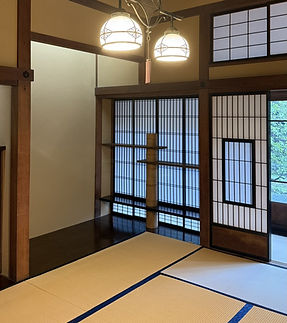
Re;PLACE KOISHIKAWA is a distinguished example of modern Japanese residential architecture, constructed in 1920.
It was built as the Tokyo residence of Izumiyama Kichibee V, a prominent industrialist from Aomori Prefecture, and designed by the master temple carpenter Hisagoro Higuchi.
The building represents the pinnacle of refined craftsmanship, constructed with carefully selected premium timbers and executed by master artisans from multiple trades who devoted the full extent of their skill and technique.
While many comparable residences of this kind have been lost over time, this structure has been remarkably preserved, retaining significant cultural and architectural value.




Contact

Visitor Guidelines & Information
To ensure a refined and comfortable experience for all guests, we kindly ask that you review the following information prior to your visit.
Accessibility
Due to the historic structure of the residence, the venue is not wheelchair accessible. We sincerely regret any inconvenience this may cause and appreciate your understanding.
Entry & Footwear
As this is a traditional Japanese residence, guests are required to remove their shoes upon entry. Please wear tabi socks or regular socks.
Parking
There is no dedicated parking available. Guests arriving by car are kindly requested to use nearby public parking facilities.
Large Luggage
Wheeled luggage, suitcases, and strollers are not permitted inside the venue.
Age Requirement
Admission is limited to guests of elementary school age and above.
Liability
The organizer shall not be held responsible for accidents, theft, loss, or disputes between guests, except in cases of willful misconduct or gross negligence on the part of the organizer.
Damage to Property
Should any damage occur to the building, furnishings, or equipment due to a guest’s actions, the cost of repair may be charged accordingly.
Prohibited Items
Outside food and beverages, as well as the use of open flames, are not permitted.
Cloakroom
Cloakroom facilities are not available. Please take full responsibility for your personal belongings.
Tea Service
For the tea service, individual allergy accommodations are unfortunately not available.
Unforeseen Circumstances
In the event of severe weather, natural disaster, public health concerns, or other unavoidable circumstances, the program may be modified or cancelled.
Photography & Media
Photography and video recording may take place during the event for archival and promotional purposes. Images and footage may be used on the organizer’s website and official social media platforms. Your understanding is greatly appreciated.
Dress Code
Traditional Japanese attire is warmly welcomed.
For Western attire, smart casual is recommended (e.g., jacket or equivalent).
Please refrain from overly casual clothing such as denim, T-shirts, or sneakers.
As guests are required to remove their shoes inside the venue, tabi socks or regular socks must be worn.
Información sobre la clase de washoku
Punto de encuentro
Chawa Masudaya
El lugar de encuentro se decidirá en consulta con el cliente.
El servicio de recogida en el hotel también está disponible por un costo adicional.
Duración del tour
Aproximadamente 2,5 a 3 horas.
Accesibilidad
Todas las personas son bienvenidas a participar. Por supuesto, los niños que puedan caminar también pueden participar, acompañados por uno de sus padres.
Por favor, infórmenos con antelación si tiene alguna alergia alimentaria.


Seguro
Estamos cubiertos por un seguro de responsabilidad civil para operadores turísticos, por lo que puede participar en nuestros tours con total tranquilidad.
En caso de sufrir alguna lesión durante el tour, por favor acuda de inmediato a un hospital junto con su guía para recibir atención médica.
Si el hospital confirma que la lesión ha sido causada por un accidente ocurrido durante el tour, nos haremos cargo de los gastos médicos.
No obstante, tenga en cuenta que si el hospital determina que la lesión no está relacionada con el tour, no podremos cubrir dichos gastos.