


Izakaya Tokyo Guide: How and Where to Experience Authentic Japanese Izakaya Culture
- Shinya Yamada
- Mar 9
- 7 min read
Updated: 1 hour ago

Discover the Culture of Izakaya in Japan
If you want to experience authentic Japanese food culture, visiting an izakaya in Tokyo is one of the best things to do. This Izakaya Tokyo guide explains what to order, how to enjoy an izakaya, and where to find authentic izakaya areas in Tokyo.
For many international travelers, visiting an izakaya is one of the best ways to understand Japanese dining culture.
An izakaya is a place where friends and coworkers gather after work to drink, share food, and talk for hours.
Instead of ordering a single main dish, people usually order many small plates to share while enjoying drinks together.
In other words, an izakaya is not just a restaurant. It is an important part of Japan’s social culture.

What Is an Izakaya?
An izakaya can be compared to a pub or casual bar, but there is one important difference: izakayas offer a wide variety of food in addition to drinks.
The origins of izakaya date back to the Edo period (1603–1868), when Tokyo was known as Edo. During that time, sake shops began serving small snacks to accompany alcohol. Over time, these snacks evolved into the diverse range of dishes found in izakayas today.
Today, izakayas are among the most popular places to enjoy everyday Japanese cuisine.

Izakaya Menu: Dishes You Should Try
When visiting an izakaya for the first time, it can be difficult to decide what to order. An izakaya menu usually consists of many small dishes meant to be shared.
Appetizers
Edamame
Boiled young soybeans with salt. Simple but extremely popular.
Tsukemono
Japanese pickled vegetables, usually milder and less acidic than Western pickles.
Japanese Potato Salad
A creamy salad made with potatoes, mayonnaise, vegetables, and sometimes bacon or fish roe.

Fried Dishes (Agemono)
Karaage
Japanese fried chicken marinated in soy sauce, ginger, and garlic. Crispy outside and juicy inside.
Nankotsu Karaage
Fried chicken cartilage with a crunchy texture.

Yakitori
Grilled chicken skewers cooked over charcoal.
Negima – chicken with green onion
Tsukune – chicken meatballs
Kawa – crispy chicken skin

Tofu Dishes
Hiyayakko
Cold tofu topped with green onions.
Agedashi Tofu
Deep-fried tofu served in warm dashi broth. Many international visitors are pleasantly surprised by this dish.

Fish
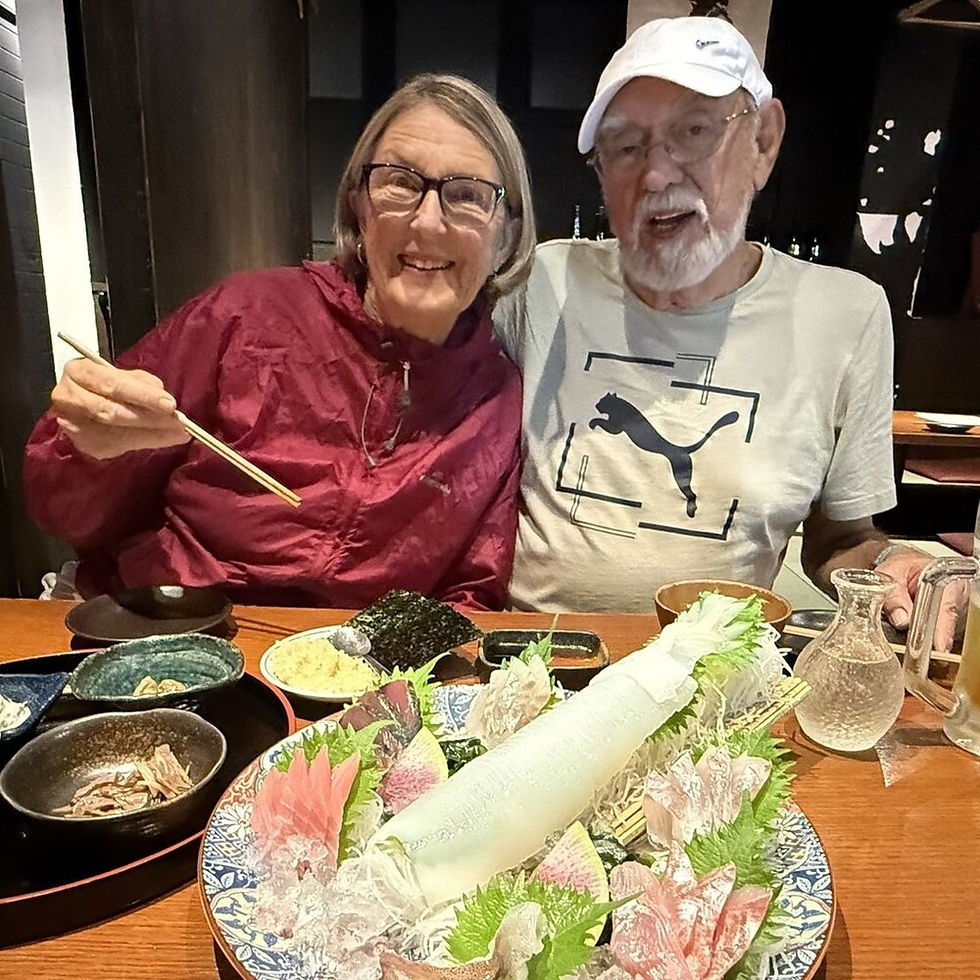
Sashimi
Fresh raw fish such as tuna, salmon, or yellowtail.
Yakizakana
Grilled fish such as the famous sanma (Pacific saury).

The End of the Meal: “Shime”
At the end of the meal, many people order a small final dish called shime.
Ochazuke
Rice served with hot tea or broth.
Grilled Onigiri
Rice balls grilled with soy sauce or miso.

Vegetarian and Gluten-Free Options in Izakaya
Many travelers are surprised to learn that izakayas often offer several vegetarian-friendly dishes.
Common options include salads, grilled vegetables, mushrooms, and tofu-based dishes. Tofu in particular is widely used in Japanese cuisine and appears in many izakaya menus.
Safe choices for vegetarians:
Edamame (Soybeans)
Hiyayakko (Cold Tofu)
Vegetable Tempura (Ask for salt instead of dipping sauce)
For travelers who need gluten-free options, some Japanese soy sauces are made without wheat. For example, Kikkoman produces gluten-free soy sauce made from peas and other ingredients.
Some visitors choose to bring their own gluten-free soy sauce when dining in Japan, although it is always polite to check with the restaurant first.
With a little preparation, vegetarian and gluten-free travelers can enjoy many dishes at a traditional izakaya.
Sake in an Izakaya: How to Choose the Best One for Food
Many travelers — and even some Japanese people — believe that the best sake is the most expensive type, such as daiginjo.
However, when it comes to pairing sake with food in an izakaya, the best choice is often different.
For dishes such as sashimi or sushi, many sushi chefs recommend junmai sake.
Junmai sake is made using only three ingredients:
rice
koji (fermented rice)
water
No additional distilled alcohol is added during production, resulting in a more natural and balanced sake.
Junmai sake usually has a softer and more subtle aroma, making it easier to pair with food.
For this reason, many experts consider junmai sake to be the best style to enjoy with fresh seafood.

For Enthusiasts: Choose a Dry Junmai
For those who want to explore sake more deeply, many enthusiasts recommend choosing a dry junmai (karakuchi).
The key indicator is Nihonshudo (日本酒度), or the sake meter value.
This number indicates the balance between sweetness and dryness.
Positive numbers (+) → drier taste
Negative numbers (−) → sweeter taste
Generally:
0 to +5 → balanced
above +5 → dry
below −3.5 → sweet
To accompany food in an izakaya, many sake lovers prefer a junmai sake with a Nihonshudo between +5 and +10, because its clean, dry flavor pairs well with many Japanese dishes.

Must-Try Drinks in an Izakaya
Besides beer, there are two drinks that are especially popular in Japanese izakayas.
Lemon Sour
Lemon sour is one of the most popular cocktails in Japanese izakayas.
Unlike many Western lemon cocktails, Japanese lemon sour is light, refreshing, and not overly sweet, making it perfect with food.
It is made with three simple ingredients:
shochu
lemon
soda water
Many visitors try it for the first time in Japan and are surprised by how refreshing it is.

Hoppy
Hoppy is a unique drink found in traditional Japanese izakayas.
Originally created as a malt beverage with a beer-like flavor, it is mixed with shochu to create a drink similar to beer.
When you order a Hoppy set, the server brings:
a bottle of Hoppy
a glass with ice and shochu
You first pour the Hoppy into the glass. When the alcohol is finished, some Hoppy usually remains in the bottle.
You can then order “naka”, which means adding more shochu to the glass.
This style of drinking is part of traditional izakaya culture.

Do You Need Reservations for Izakaya in Tokyo?
Many travelers wonder whether reservations are required when visiting an izakaya in Tokyo.
In most casual izakayas, reservations are not necessary. You can usually walk in and find a seat, especially in lively dining districts where many small restaurants are located close together.
However, some popular izakayas or small establishments with limited seating may require reservations, particularly on weekends or during busy dinner hours.
In many cases, reservations must be made by phone. Because of this, making a reservation in languages other than Japanese can be quite challenging for international visitors.
If you want to avoid language difficulties or long waits, joining a guided izakaya experience can be a convenient way to enjoy the atmosphere while learning about Japanese food culture.
How to Order Food in an Izakaya If You Cannot Read Japanese
Many travelers worry about entering an izakaya with a menu written only in Japanese.
One easy way to order food is to use the word moriawase, which means an assortment or chef’s selection.
For example:
sashimi moriawase
yakitori moriawase
tempura moriawase
This allows you to try several dishes without reading the entire menu.
You can also ask for “kyo no osusume,” meaning the recommendation of the day.

Basic Izakaya Etiquette
Otoshi
In many izakayas, a small dish called otoshi is automatically served before you order food.
This functions as a table charge and usually costs about 300–500 yen per person.
Calling the Staff
To call the staff, you can say “Sumimasen,” similar to saying “Excuse me.”
Kanpai
When everyone has their drink, it is customary to raise your glass and say “Kanpai,” which means “Cheers.”
Sharing Dishes
In izakayas, dishes are usually shared among everyone at the table.

Best Izakaya Areas in Tokyo
Tokyo has many neighborhoods famous for izakaya culture. If you are looking for authentic izakaya in Tokyo, the following areas are among the most interesting places to explore.
Omoide Yokocho (Shinjuku Ward)
If you want to experience the deeper and more traditional side of the izakaya world, Omoide Yokocho is one of the best places to start.
This narrow alley is filled with small yakitori restaurants and traditional bars. Its origins date back to the period after World War II, when so-called “black markets” (yami-ichi) appeared.
A yami-ichi was a spontaneous and lively street market that emerged during times of shortage in the years following the war.
Other places with similar historical roots include Nonbei Yokocho in Shibuya and Ameya-Yokocho (Ameyoko) in Ueno.

Golden Gai (Shinjuku Ward)
Golden Gai is one of the most famous bar districts among international visitors.
More than 100 tiny bars are packed into narrow alleyways.
Because many travel guidebooks describe it as a retro nightlife area in Shinjuku, today many visitors are tourists from overseas.
As a result, it can feel slightly different from the traditional izakaya atmosphere many travelers imagine.

Kagurazaka (Shinjuku Ward): Tokyo’s Hidden Izakaya District
In the same district of Shinjuku lies Kagurazaka, a neighborhood highly recommended for travelers seeking authentic izakaya culture.
This area has more than 200 izakayas. According to Tabelog, Japan’s largest restaurant review website, there are 210 izakayas within an 800-meter radius of Kagurazaka Station.
Many are hidden in narrow alleys.
Kagurazaka is very well known among Japanese people as a major dining district, yet it is still relatively unknown among international tourists.
This makes it a great place to enjoy izakaya culture surrounded mainly by local Japanese customers.

Izakaya Prices in Tokyo
In a typical izakaya in Tokyo, dinner usually costs about 5,000–8,000 yen per person (roughly $35–55 USD), depending on what you order and how many drinks you have.
Many travelers are surprised to learn that izakayas can be quite affordable, especially when dishes are shared.
Conclusion
Many local izakayas do not have English menus, which can make ordering food difficult for travelers.
For this reason, we offer izakaya tours in Kagurazaka, where our guides help interpret Japanese menus and explain Japanese food culture.
If you want to discover the true taste of Japan, enjoy an izakaya like a local.
Book an Izakaya Experience in Tokyo
Join our guided Izakaya Tokyo tour and discover authentic local izakayas in Kagurazaka.
Why Ramen Tastes Better When You’re Already Full?
But wait—the night isn't over yet. To truly eat like a local, there is one final, essential ritual you must experience. In Japan, we call it 'Shime Ramen.' Discover why a steaming bowl of noodles is the ultimate way to end your night.
How to Access Kagurazaka in Tokyo
The Kagurazaka area is located within 30 minutes of most major stations in Tokyo.
This is because Kagurazaka sits in the center of the city, close to the Yamanote Line, one of Tokyo’s most important train lines.
Thanks to its convenient location, Kagurazaka is easy to visit during your trip to Tokyo.
Come and discover the charm of this historic neighborhood filled with restaurants, traditional alleys, and Japanese culture.

![An Insider's Guide to Izakaya in Japan [2025 Edition]: A Local Expert's Secrets](https://static.wixstatic.com/media/983a60_e8ba21cf89c042969c697c86d045b964~mv2.jpeg/v1/fill/w_980,h_980,al_c,q_85,usm_0.66_1.00_0.01,enc_avif,quality_auto/983a60_e8ba21cf89c042969c697c86d045b964~mv2.jpeg)
![The Complete Guide to Izakaya in Japan [2025 Edition] | Tokyo's Best Gourmet Town, Kagurazaka](https://static.wixstatic.com/media/983a60_ef2e6025c7494e9299933c493cee49c9~mv2.jpeg/v1/fill/w_980,h_980,al_c,q_85,usm_0.66_1.00_0.01,enc_avif,quality_auto/983a60_ef2e6025c7494e9299933c493cee49c9~mv2.jpeg)
Comments