


Ozashiki Asobi in Tokyo: A Complete Guide to Geisha Culture, Games, Etiquette & a 'Phantom' Drinking Game
- Shinya Yamada
- 41 minutes ago
- 10 min read
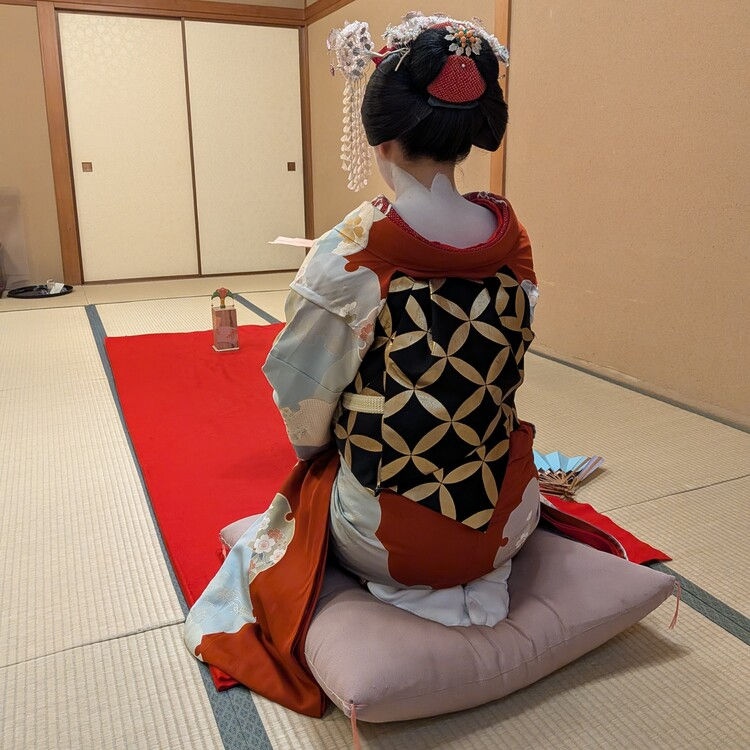
I was sitting cross-legged on a tatami mat in a traditional Tokyo ryotei, sake cup in hand, when a geisha pulled out a set of wooden dice and a tray of small orange cups I had never seen before — and neither, it turned out, had most of her colleagues. That was my introduction to daidai, a drinking game so rare that searching for it online produced no meaningful results I could find. Even veteran geisha in the Kagurazaka district had never heard of it.
But I'm getting ahead of myself. Before we get to the phantom game, let me walk you through everything you need to know about ozashiki asobi — one of Japan's most extraordinary and least understood cultural experiences.
What Is Ozashiki Asobi?
Ozashiki asobi (お座敷遊び) is the collective term for the entertainment that takes place in a traditional Japanese banquet room (ozashiki) alongside geisha. The word encompasses three distinct elements: dance, live music, and games.
This is not a stage show you watch from a distance. Ozashiki asobi is participatory. You laugh, compete, win and lose (and drink), and share moments with geisha in an intimate tatami room — an experience that has remained essentially unchanged since the Edo period. It takes place at a ryotei (traditional Japanese restaurant) in Tokyo, or at an ochaya (teahouse) in Kyoto.
Many of these games are most authentically experienced inside an ozashiki — and that exclusivity is precisely what makes ozashiki asobi so remarkable.

The Cast: Who Are the Geisha?
For many international visitors, "geisha" conjures a single image. In reality, the world of ozashiki involves several distinct roles.
Geisha / Geiko (芸者・芸妓)
A fully qualified professional entertainer. In Tokyo, she is called geisha; in Kyoto, geiko; and in other hanamachi (flower towns) such as Kanazawa and Niigata, she is called geigi (芸妓) — the same kanji, a different reading. Her kimono is relatively understated compared to an apprentice's — the mark of an accomplished adult professional. She may wear a wig or style her own hair depending on the district; in Kagurazaka, geisha style their own hair.

Hangyoku / Maiko (半玉・舞妓)
An apprentice geisha. In Tokyo, apprentice geisha are called hangyoku, and their appearance and customs differ by district. In Kyoto, she is called maiko, recognizable by her elaborate hairstyle using her own hair, a long trailing darari obi sash, and vividly colorful kimono.

Tachikata (立方)
The dancer. This geisha specializes in Japanese classical dance and brings visual elegance to the ozashiki.

Jikata (地方)
The musician. She plays shamisen (a three-stringed lute) and sings. The jikata is arguably the most important figure in ozashiki asobi — she controls the tempo of the games, orchestrates the atmosphere, and smoothly fills any awkward silences. Without the jikata, ozashiki asobi simply does not work.
Geisha are, above all, professionals of hospitality. They read the room instinctively, draw out shy guests, and make first-timers feel at home within minutes. Think of them as the world's most culturally accomplished hosts.

How the Evening Unfolds
A geisha banquet at a ryotei follows a natural, unhurried rhythm. Here is what to expect:
1. Arrival at the ryotei — You are greeted at the entrance and shown to your tatami room by a nakai (attendant).
2. Seated and settled — Drinks are ordered; you begin to relax into the space.
3. Geisha entrance and kanpai — The geisha enter, introductions are made, and the evening begins with a toast.
4. Kaiseki dinner begins — Exquisite multi-course Japanese cuisine is served.
5. Conversation with the geisha — Don't hesitate to ask questions. "Where are you from?" and "How long have you been training?" are always welcome.
6. Dance and music performance — The geisha perform seasonal dances accompanied by live shamisen. Set down your chopsticks and give your full attention — this is the formal artistic heart of the evening.
7. Ozashiki games begin — The atmosphere shifts from refined to playful. This is where the real fun starts.
8. O-hiraki (お開き) — The evening closes. Geisha have other banquets to attend; punctuality is a professional necessity.
A note on senja-fuda (千社札): Shortly after entering, geisha will distribute their personal calling cards — small, beautifully printed name cards called senja-fuda. These are among the most coveted souvenirs of any Japan trip. Tucking one into your wallet is said to bring good fortune, from the Japanese wordplay: maiko-mu (舞い込む), meaning "money dances in" — a pun on maiko (apprentice geisha) and the verb mai-komu (to drift or dance into). Keep yours safe.

Etiquette You Must Know
Ozashiki asobi takes place in an intimate, traditional setting. A few simple rules will ensure the evening flows beautifully.
Be on time — without exception. Geisha are working professionals who manage multiple engagements in a single evening. If you are late, your session still ends at the original time — the geisha cannot stay longer simply because you arrived late. Punctuality is the single most important rule.
Wear socks. Tatami rooms are entered without shoes. Bare feet are considered unclean on tatami. Even if you are wearing sandals, bring socks and put them on at the entrance. Smart casual dress is appropriate: a jacket for men, a skirt below the knee for women.
Pour for each other — never for yourself. Geisha do not eat during the banquet, but they do drink. Pour sake for the geisha, and they will pour for you. This reciprocal oshaku (pouring sake for one another) is fundamental to the ozashiki culture. Pouring your own drink (tejaku) is considered poor form.

Non-drinkers are fully welcome. Soft drinks are always available as a substitute. If you lose a game and must take a penalty drink, you can take it in green tea or water without any awkwardness.
Photos and video are welcome at Yukimoto (幸本・ゆきもと). Policies vary by venue. At the ryotei Yukimoto in Kagurazaka, photography and video are permitted — a rarity worth noting. Always confirm the policy in advance at other venues.
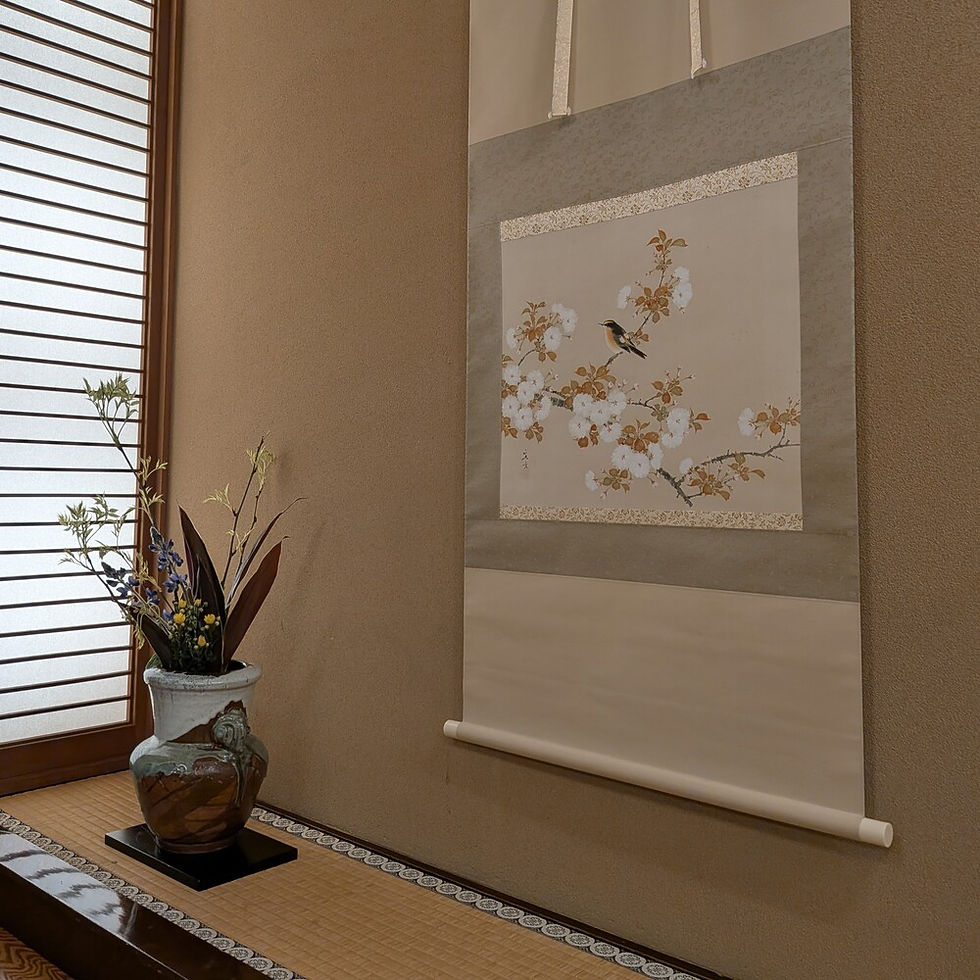
The Heart of Ozashiki Asobi: Drinking Games
Here is something no guidebook will tell you directly: many ozashiki games are, at their core, drinking games.
The loser takes a bappai (罰杯) — a penalty cup of sake. This is not incidental; it is the entire point. One can imagine that guests who grew bored simply drinking invented increasingly elaborate excuses to make each other drink more.
When you lose, the geisha will perform a call — a theatrical cheer urging you to drain your cup. The call differs depending on the guest:
For male guests: "O-nii-sama no gugu-tto nomu toko mitemitai~ Hai, ikkai, nikai, sankai... jukkai! O-nii-sama wa o-tsuyoi~! Ii otoko~!" ("I want to see you drink it all down~ One, two, three... ten! What a drinker — and what a handsome man!")
For female guests: "O-nee-sama no gugu-tto nomu toko mitemitai~ Hai, ikkai, nikai, sankai... jukkai! O-nee-sama wa o-tsuyoi~! Ii onna~!" ("I want to see you drink it all down~ One, two, three... ten! What a drinker — and what a beautiful woman!")
The geisha deliver these calls with complete sincerity and theatrical flair. The room invariably erupts.
Famous Ozashiki Asobi Games
Konpira Fune Fune (金毘羅船々)
This is the game most international visitors have seen on YouTube — and for good reason. It is fast, musical, and brutally unforgiving.
Two players sit facing each other across a low table (kyosoku, or armrest stand). A small cup called a hakama (sake holder) sits on the table between them. To the accompaniment of live shamisen, players alternate touching the table: when the hakama is present, touch it with an open palm (paper); when it has been taken, touch the table with a closed fist (rock). Either player may take the hakama at any moment. The shamisen tempo accelerates continuously until someone makes a mistake.
The song originates from a folk melody sung during pilgrimages to Kotohira Shrine in Kagawa Prefecture. Its quick, lilting rhythm spread to ozashiki across Japan as a sawagi-uta (party song). Rhythm is everything in this game — and the advantage goes entirely to those who can keep time.

Tora Tora — Tiger, Samurai & Grandmother (とらとら)
Played on opposite sides of a folding screen (byobu), this is a full-body rock-paper-scissors rooted in Japanese literary history. The game is said to derive from Kokusenya Kassen by the playwright Chikamatsu Monzaemon, featuring the hero Watōnai and a tiger — though an alternative origin linking it to samurai general Kato Kiyomasa's tiger hunt is also widely cited.
The three characters form a triangle of defeat:
- Samurai (sword-thrusting pose) defeats Tiger
- Tiger (crouching on all fours) defeats Grandmother
- Grandmother (hunched over a cane) defeats Samurai — because she is his mother, and a mother always wins

Before each round, both players chant together:
"Tora, to-ra, to-ra, tora. Senri hashiru yo na yabu no naka wo mina-san nozoite gorōji mase..."
("A tiger races a thousand leagues through the thicket — everyone, take a look...")
Many international guests say that the chant is their favorite part. The game itself is secondary to the pure joy of shouting "Tora, to-ra, to-ra tora" together with a geisha.

Surface Tension — Hyomen Choryoku (表面張力)
Deceptively quiet, unexpectedly tense. A sake cup is placed on washi paper on a low table. Each player takes a turn pouring sake into the cup. The sake rises, and rises, held in place by surface tension alone — the meniscus bulging visibly above the rim. The player who causes it to overflow loses.
Warm nurukan sake (heated to around 40°C) is recommended — perhaps because the steam and warmth make every pour feel more precarious. It sounds simple. In practice, the silence in the room as the cup fills becomes almost unbearable.

Rare & Unusual Games
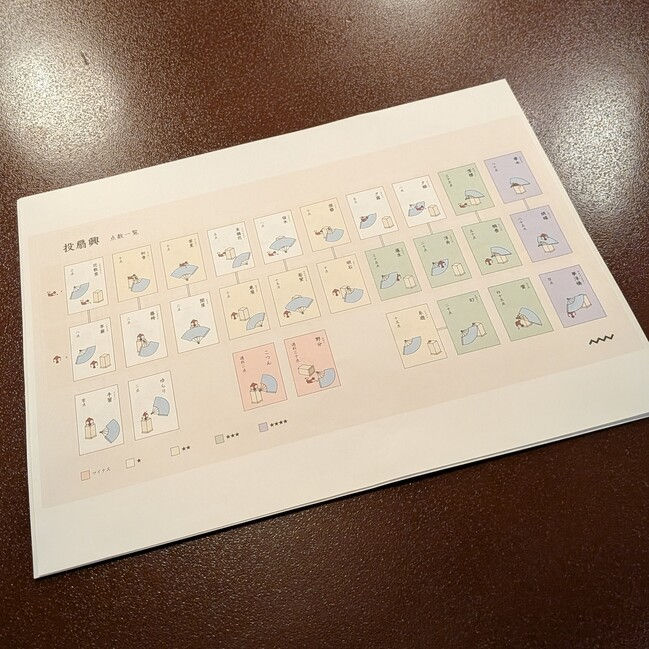
Tosenkyo — Fan Throwing (投扇興)
Tosenkyo is the most visually elegant game in the ozashiki repertoire, and the least practical for groups.
A small target called a cho (butterfly) is balanced on a stand called a makura (pillow). Players take turns throwing an open fan at the target. Points are awarded based on the resulting configuration of fan, butterfly, and stand — each arrangement named after a chapter of The Tale of Genji or a poem from the Hyakunin Isshu.

Despite its aristocratic associations, tosenkyo was actually popularized among ordinary townspeople during the Edo period (source: Ibasen, Tokyo). It is not a Kyoto invention.
My honest assessment: tosenkyo is beautiful to watch, genuinely difficult to play, and slow to resolve. With a full group, a single round takes 30–60 minutes. The scoring system requires some study. I grew restless within twenty minutes — and I say this as someone who went in genuinely eager to love it. The mistress of Yukimoto ryotei does not include tosenkyo in her ozashiki asobi programs for international guests. Having played it, I think she is absolutely right.


Bekuhai — The Cups You Cannot Put Down (可杯)
Bekuhai comes from Tosa (present-day Kochi Prefecture) in Shikoku — a region so renowned for its drinking culture that it is sometimes called Sakenokuni Tosa (the Sake Kingdom of Tosa).
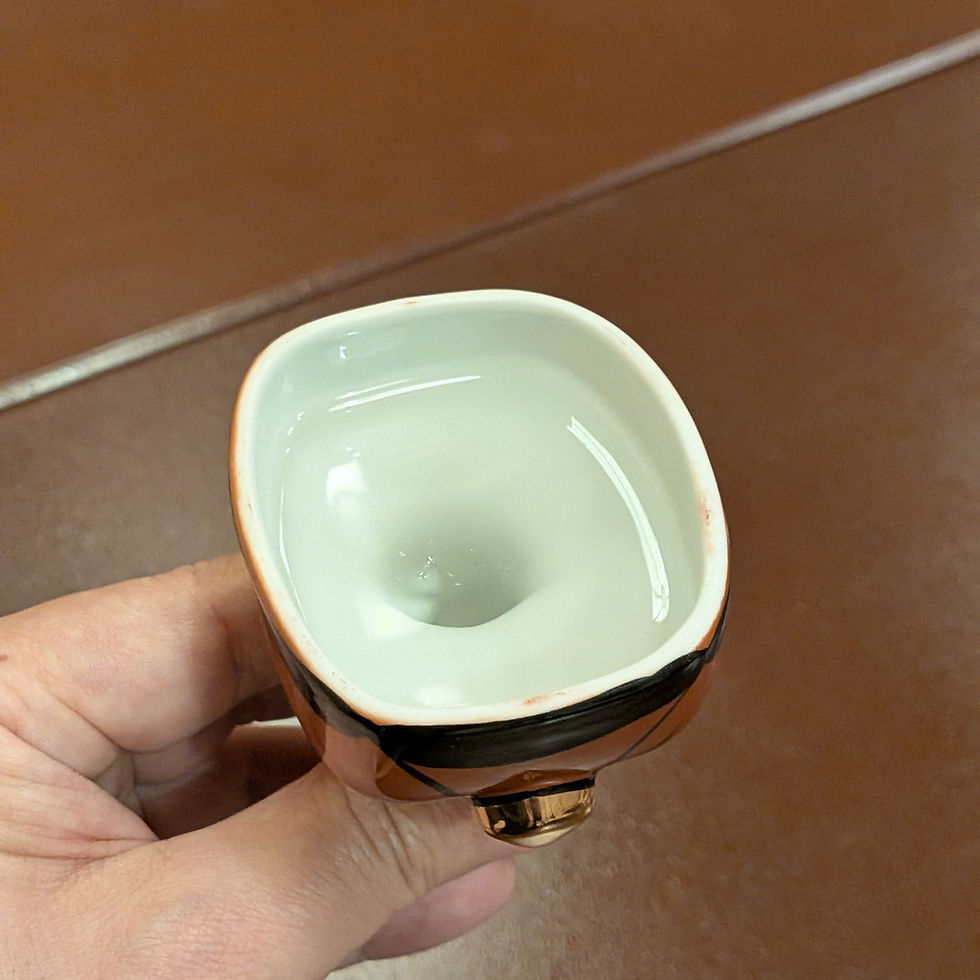
The game uses three specialty cups decorated with the faces of Tengu (a long-nosed goblin), Hyottoko (a comic male figure), and Okame (a round-faced woman). A decorative top is spun, and whoever the tip points toward must drink from the cup indicated.
- Okame: A normal cup. Drink it fully.
- Hyottoko: Has a small hole in the base. Cover it with your finger — and drink it fully before releasing your grip, or the sake escapes.
- Tengu: The nose is so long the cup cannot rest flat on any surface. You cannot put it down until it is empty.
The Tengu cup holds a substantial amount of sake. This game is not for the faint of heart — or the faint of liver.


The Phantom Game: Daidai (橙)
This is why I wrote this article.
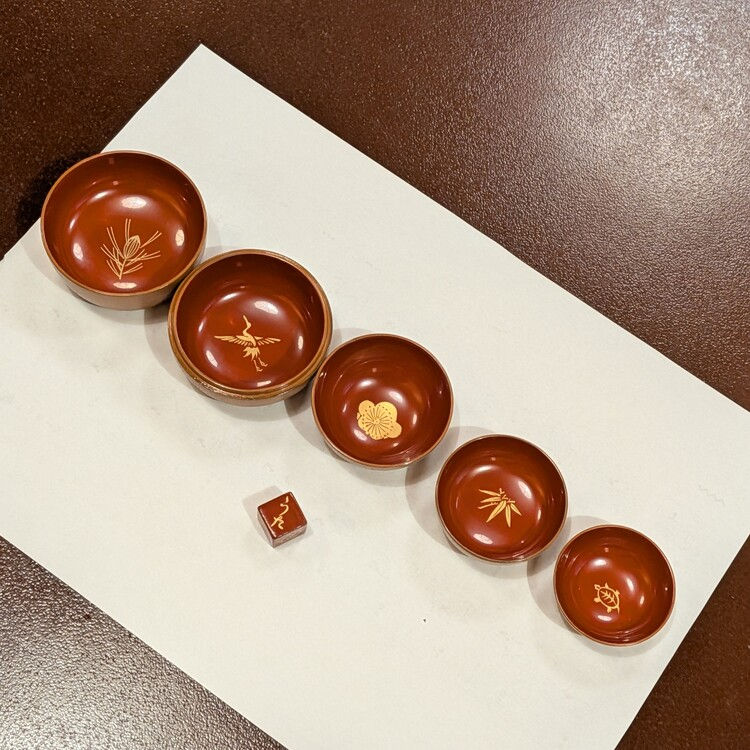
Daidai (橙) uses a set of small sake cups in varying sizes, each depicted on the face of a wooden die. Players take turns rolling the die, then must drink from whichever cup corresponds to their result. The name derives from the deep orange (daidai-iro, 橙色) color of the cups — the same shade as the bitter orange fruit used in Japanese New Year decorations.
The cups are smaller than those used in bekuhai, making daidai the more accessible option for guests who are less confident with sake. The trade-off is that the drama is correspondingly lower — which is why, if you are playing both, daidai should come first and bekuhai second.
Here is what makes daidai extraordinary: searching for it online produced no meaningful results I could find. Search for it in Japanese or English and you will come up empty. I asked multiple geisha in the Kagurazaka district — one of Tokyo's most active geisha districts — whether they had heard of it. Most had not. The mistress of Yukimoto told us she had never seen it played before.
I played daidai at a traditional ryotei in Tokyo on April 13, 2026. As far as I can determine, this may be one of the first written descriptions of the game to appear online.
If you have encountered daidai elsewhere, I would genuinely love to hear about it.
The "Ichigen-san Okotowari" Culture — Why Ryotei Were So Exclusive
You may have read that traditional Japanese ryotei and teahouses operate on a policy of ichigen-san okotowari (一見さんお断り) — "no first-time guests." This sounds like snobbery. The reality is more interesting.
Traditional ryotei did not collect payment at the end of each meal. Bills were settled twice a year, in a system called tsuke barai (ツケ払い) — essentially running a tab for six months at a time. For this to function, the establishment needed certainty that the guest would pay. A guarantor — an existing regular customer who vouched for the new guest — served as a form of co-signer.
Beyond finance, the guarantor served another purpose: they provided the ryotei with detailed information about the guest's preferences, dietary restrictions, professional background, and social sensitivities. This allowed the ryotei to deliver its signature omotenashi (hospitality) from the very first visit. The introduction was not gatekeeping — it was the mechanism that made perfect hospitality possible.
Today, this system has evolved. Tour operators and hotel concierges have, in many cases, replaced the traditional guarantor role, making ozashiki asobi accessible to international visitors for the first time.
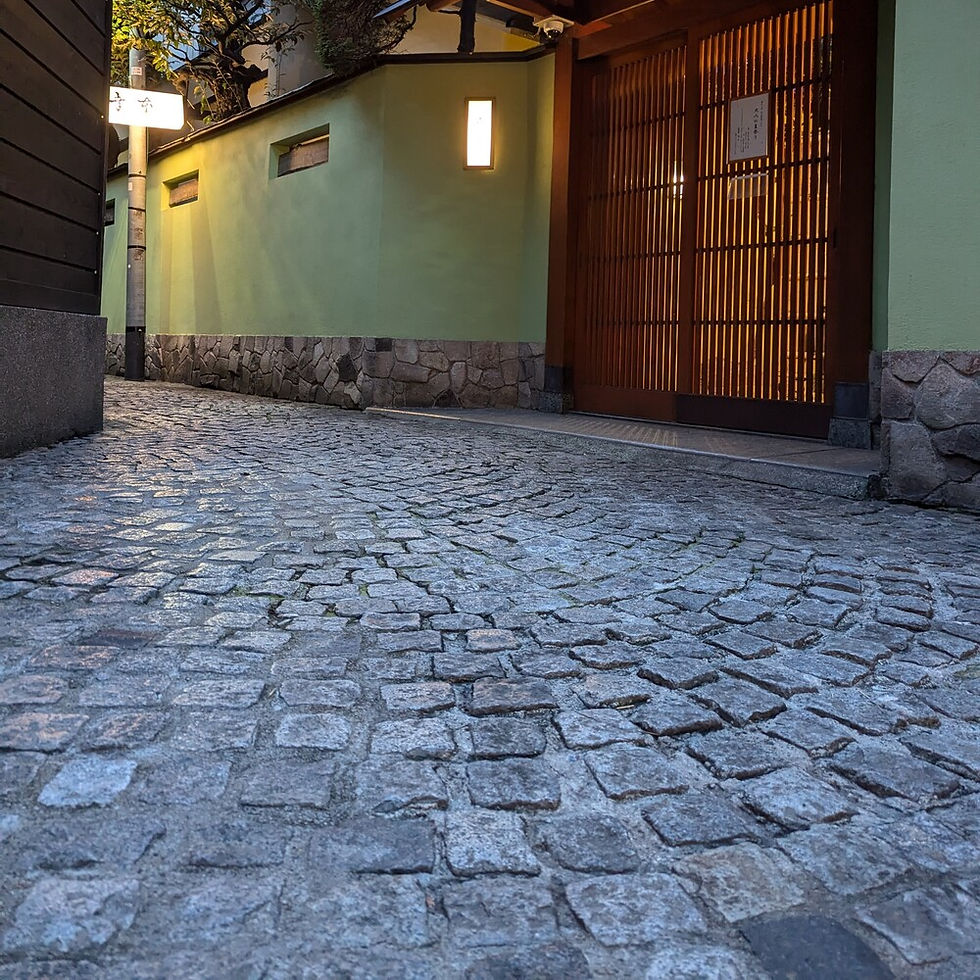
Our company is based in Kagurazaka (神楽坂), one of Tokyo's most atmospheric and well-preserved geisha districts. Through our established relationship with Yukimoto ryotei (幸本・ゆきもと) in Kagurazaka, we are able to arrange geisha banquets for first-time guests — including international visitors — who would otherwise have no point of entry into this world.
What is included:
- Full kaiseki dinner
- Geisha entertainment (dance, shamisen performance, ozashiki games)
- Dedicated multilingual guide throughout the evening (English, French, Spanish, German)
- Photography and video permitted
Pricing (tax excluded):
This is not an inexpensive experience. Yukimoto is a ryotei that accepts only senior figures from Japan's political and business world. What we offer is access — to a world that most visitors to Japan will never see, guided by someone who can translate not just the language but the culture.
We receive more than 20 bookings per month for this program. Availability is limited.
If you are ready to experience ozashiki asobi — including, with luck, a game that has left almost no trace online — we would be glad to welcome you.
For more on geisha banquet etiquette, the full evening flow, and what to expect at Yukimoto, see our related guides on this site.
Book Each Experience
How to Access Kagurazaka
The Kagurazaka area is conveniently located within 30 minutes from any major station in Tokyo. This is because Kagurazaka is situated in the heart of Tokyo, at the center of the Yamanote Line. Please come and visit this convenient and charming Kagurazaka.


Comments